

How Do I Know if a Cove Will Be Too Shallow for My Boat on Lake Norman?
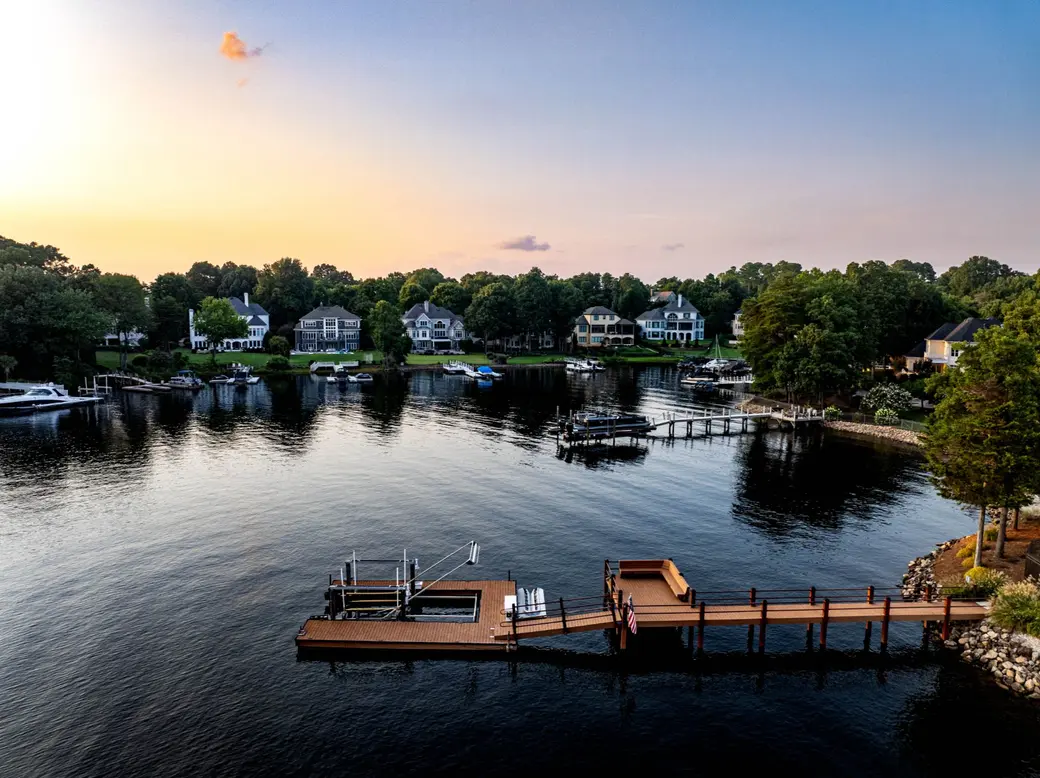
How Do I Know if a Cove Will Be Too Shallow for My Boat on Lake Norman?
By Michele Weaver, eXp Realty Luxury | The Negotiator Who Owns Lake Norman
If you're thinking about buying a waterfront home on Lake Norman, one of the most important questions you should ask is this:
“Michele, how do I know if the cove is deep enough for my boat?”
It’s a smart question—and one that far too many buyers forget to ask until after they’ve fallen in love with the house, the view, and the dock. On Lake Norman, water depth varies dramatically from cove to cove, and even from one side of a cove to the other. A beautiful shoreline doesn’t always mean your boat can get in and out year-round.
As someone who has helped buyers navigate these waters for nearly 30 years, here’s exactly how to evaluate whether a cove is deep enough for your boating lifestyle.
Water Depth Changes by Season, Location, and Shoreline Structure
Lake Norman’s water level isn’t constant. Duke Energy intentionally lowers the lake several feet in the fall and winter. In deeper areas, this barely makes a difference. In shallower coves, your dock may become unusable, and your boat may have to be removed entirely.
A cove that looks perfect in April can be ankle-deep in January. That’s why year-round depth matters—and why you can’t rely solely on online listings or photos.
The Most Reliable Way to Know: Measure the Water Depth at Your Dock
This is the first thing I help buyers do when evaluating a waterfront property. You need to know two depths:
Depth at full pond
Depth during seasonal drawdown
Full pond is 100.0 on Lake Norman’s scale. Winter lows often range between 94.0 and 96.0, depending on the year. A six-foot drop in water level can completely change the functionality of a cove.
Ideally, you want at least six feet of depth at full pond for comfortable boating.
Eight to twelve feet is even better.
Fifteen feet is exceptional.
A cove that drops from ten feet to four feet in winter may still allow pontoon or runabout access. A cove that drops from six feet to one foot will not.
I always recommend evaluating depth with accurate measurements—not assumptions.
Pay Attention to the Bottom Composition
The lakebed varies dramatically. Some areas have sandy bottoms that remain stable, while others are silty, mucky, or filled with long, shallow shelves that extend far into the water.
Even if the depth seems adequate, a silty bottom may make navigation difficult, and boat lifts may not operate correctly during low water.
A marine contractor or inspector can help determine whether the shoreline has a drop-off, a gentle slope, or a long shelf that becomes problematic in winter.
Look at Neighboring Docks for Clues
One of the easiest ways to gauge water depth is to observe what types of boats your neighbors have and how their docks are positioned.
If neighboring docks have:
Lift systems fully lowered in winter
Smaller boats or no boats at all
Dock extensions reaching far out into the cove
Boats removed seasonally
These can all be signs of shallow conditions.
If neighbors have deep-hulled boats, wake boats, or sailboats docked year-round, that’s usually a strong indicator of consistent depth.
Understand the Behavior of That Specific Cove
Every cove on Lake Norman has its own personality. Some stay deep. Some become narrow and shallow during winter. Some accumulate debris. Some take wake impacts that shift the shoreline over time.
This is where local knowledge matters. I know which coves maintain depth, which ones struggle during winter drawdowns, and which ones require dredging every few years.
Speaking of dredging—many buyers ask whether they can dredge to create more depth. The answer is that it depends heavily on Duke Energy’s shoreline classifications and regulations. Some areas allow dredging; others do not. This is something we always verify early in due diligence.
Visit the Property by Boat if Possible
This is one of my favorite parts of helping clients buy on the lake. Seeing a property from the water reveals things photos can’t show you:
How easily your boat can navigate in and out
Whether the cove bottlenecks or gets shallow near the entrance
Where the structure of the dock sits in relation to the lake bottom
How the shoreline behaves in relation to waves and wake
It’s an experience you can’t replicate online—and it can make or break your decision.
Michele’s Take: Water Depth Is One of the Most Important Factors in Waterfront Value
It doesn’t matter how beautiful the home is if you can’t use your boat. Water depth impacts lifestyle, dock functionality, and long-term resale value.
Deep water sells faster.
Deep water commands higher prices.
Deep water keeps your boating season intact.
My job is to make sure you understand the reality of a property’s water depth long before you make an offer. No guessing. No surprises. Just clarity and confidence.
Want to Make Sure the Cove Fits Your Boat and Lifestyle?
Let’s evaluate the water depth, the shoreline structure, the dock condition, and the long-term behavior of the cove together. Buying a lakefront home is a big decision—knowing what you’re truly getting is everything.
Call or text me at 704-903-8294
Or schedule a private consultation at www.micheleweaver.expportal.com
With the right guidance, you can choose the perfect cove, the perfect dock, and the perfect home for the way you want to live on Lake Norman.
Michele Weaver
The Negotiator Who Owns Lake Norman
eXp Realty Luxury | Denver, NC
704-903-8294
www.micheleweaver.expportal.com
Categories
Recent Posts









Broker | License ID: NC 174721
+1(704) 903-8294 | michele@micheleweaverrealestate.com